
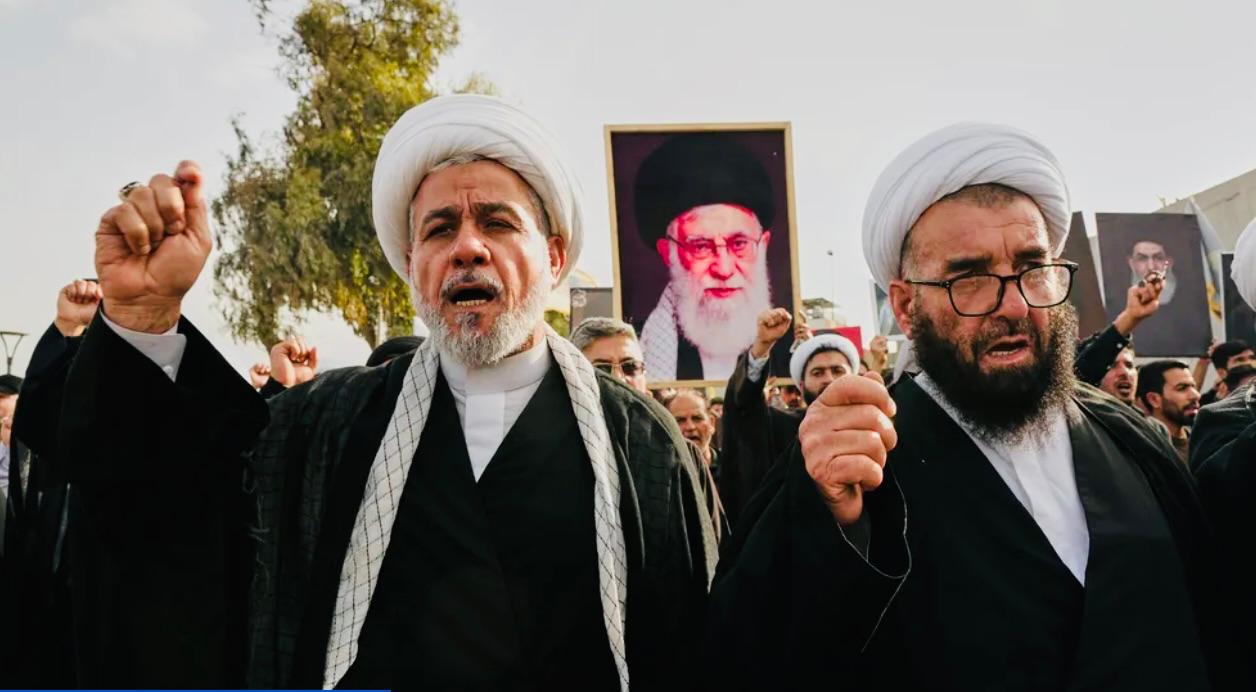
Courtesy photo: The Hill
Iran isn’t trying to defeat the U.S. in a conventional war. It is trying to exhaust it.
For decades and in this war, Tehran has pursued a disciplined strategy of imposing steady costs. It kills Americans through proxies, disrupts energy markets, raises gasoline prices, and rattles financial systems until U.S. political will collapses. Iran is betting that the legacy of “forever wars,” combined with domestic polarization, will once again force Washington to walk away.
It is a strategy built on a simple assumption: The U.S. cannot sustain a long war of attrition.
That assumption is wrong if the U.S. chooses to fight on its own terms.
Iranian leaders believe they can win because the U.S. has little appetite for a large-scale ground invasion, the kind many analysts argue would be required to dismantle the Islamic Revolutionary Guard Corps and topple the regime.
They may be right about America’s reluctance to deploy troops. But they are wrong to conclude that this makes American victory unattainable.
The U.S. can win a war of attrition against Iran, but only if it stops fighting on Tehran’s terms.
Victory does not require occupation forces. A ground invasion would strengthen the regime’s narrative, potentially unifying the population against the U.S. while imposing unsustainable costs. The path to victory lies in exploiting Iran’s internal vulnerabilities and aligning U.S. strategy with the aspirations of its people.
Early predictions of rapid regime collapse were naïve. They underestimated both the ideological zealotry of Iran’s leadership and its willingness to use extreme violence against its own population. The regime has spent decades hardening its security apparatus and perfecting repression. The Revolutionary Guard, which dominates major sectors of the economy, is deeply invested ideologically and financially in the system’s survival.
The central question is not whether Iran can be defeated quickly, but whether the U.S. can win a long war of attrition without deploying large numbers of troops.
The answer is yes — if the Iranian people become the center of U.S. strategy.
Nearly half of Iran’s population consists of ethnic minorities with longstanding grievances against the regime. At the same time, millions of Iranians, including the majority Persian population, have repeatedly risked their lives to protest clerical rule. These are not marginal actors. They represent a population disillusioned with the regime and open to a different future.
This is the decisive terrain of the conflict.
The U.S. should prioritize empowering these internal forces, fostering a more unified opposition, expanding secure communications, and providing material support: financial, technological, and defensive/offensive capabilities to those willing to challenge the regime. Without the means to defend themselves, civilians remain vulnerable to the Revolutionary Guard and its Basij paramilitary, which use intimidation, torture, rape, and lethal force to suppress dissent.
This is not nation-building. It is strategic alignment with a population that already seeks change.
Washington must also define its objective clearly: a long-term pathway to regime change driven from within Iran. This is not a campaign measured in months, but a sustained effort measured in years. Iran’s leadership thinks in decades; the United States must do the same.
A strategy of attrition on America’s terms must also include sustained economic and geopolitical pressure. Sanctions, especially secondary sanctions, must be rigorously enforced to erode the regime’s financial base.
The United States and its allies must guarantee freedom of navigation in the Strait of Hormuz through credible deterrence and coordinated diplomacy that brings Gulf, Asian, and European partners into sharing the burden of defending the commerce they depend on. Iran cannot be allowed to treat an international waterway as its own toll road.
Equally important is disrupting Iran’s ability to export oil to China at discounted rates while threatening the Strait. Curtailing this trade would increase pressure on Tehran while reinforcing broader U.S. competition with Beijing.
This approach strengthens America’s negotiating position. Iran does not respond to goodwill; it responds to pressure. Negotiations succeed only when the regime believes its survival is at risk. The United States should present clear, binary choices: comply with strict limits on nuclear and missile programs and end support for terrorist proxies or face sustained and escalating isolation.
Skeptics argue this strategy is too slow. But the alternative, cycling between limited strikes and premature concessions has repeatedly failed. It allows Iran to absorb pressure, claim victory simply by surviving, and rebuild for the next round.
A U.S.-led war of attrition, fought on its own terms and without boots on the ground, reverses that dynamic. It denies Tehran the narrative of endurance and forces it to confront simultaneous internal unrest and external pressure.
There are already signs of strain. Economic mismanagement, corruption and widespread dissatisfaction have created visible cracks within the system. A patient, disciplined U.S. strategy can widen them.
The Iranian people are the decisive factor. Unlike in Iraq or Afghanistan, large segments of Iran’s population are receptive to improved relations with the West. More than 80 million of its 90-plus million citizens, along with a capable diaspora, constitute a force for change that no external intervention could replicate.
The U.S. must make clear that it stands not against Iran as a nation, but with its people against a regime that rules through repression at home and aggression abroad.
This is not a war of choice. It is an ongoing conflict that has spanned nearly half a century. Allowing Iran to approach nuclear weapons capability while expanding its missile arsenal and proxy network only increases the risk of a far more dangerous confrontation in the near future.
Victory will not come from invading Iran. It will come from outlasting the regime — economically, politically and strategically — while empowering the very population it fears most.
Iran’s leaders believe time is their greatest weapon. But the U.S. can turn time into its own advantage.
That is how America wins a war of attrition on its own terms: not with boots on the ground, but by aligning U.S. power with the one force the regime ultimately cannot defeat — its own people.
This article appeared in The Hill on April 4, 2026.
Eric R. Mandel is the director of the Middle East Political Information Network and senior security editor for the Jerusalem Post’s Jerusalem Report.